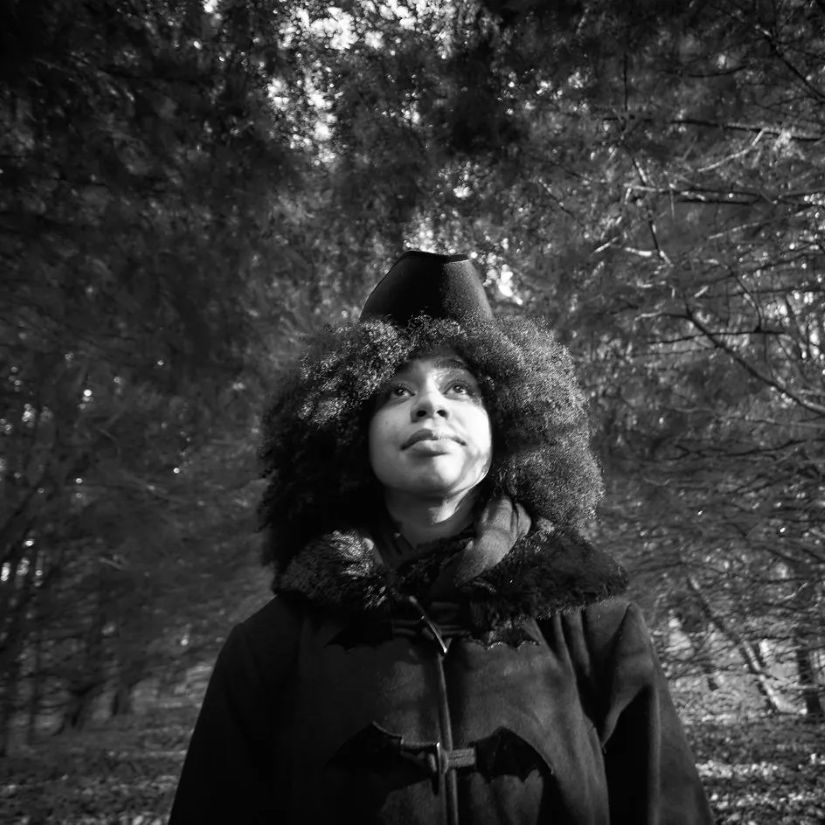
Episode Transcript
INTRO: Welcome to the Trailblazers Podcast series by Periplum, sharing the experiences of trailblazers living and working in the Tees Valley: the innovators, activists, workers and adventurers as told in their own words.
Episode 4 Jennifer Yuill, Activist for the No More Page 3 Campaign
Jennifer [Interviewee]
I am Jennifer Yuill. I was born in Cameron Hospital in Hartlepool, which was knocked down, I think in the [19] 90s I think it was, and I suppose it's quite sort of famous hospital that was the maternity hospital in Hartlepool.
I still live in Hartlepool, which has not always been the case. So I did move away for university. I went to university down south and I lived down south for I think it was about ten years before I moved back to Hartlepool after my daughters were born and just wanting to be back around family and back to our roots, really. So, like a lot of people from Hartlepool, I did come back. [laughs]
Vicky [Interviewer]
So tell me what family life was like for you.
Jennifer [Interviewee]
Um…I suppose it was probably quite…normal. I have a younger brother. I lived with my mom and my dad and we lived in a village called Hart Village. I used to go horse-riding, so quite an idyllic childhood, really. We lived in the countryside, quite privileged in lots of ways. Quite a close family. Not a big family. We didn't have a big, wide network of cousins and so on. But we did sort of see my grandparents, close to them. So I would say probably quite a standard upbringing really, for this sort of [19]80s into the [19]90s.
Vicky [Interviewer]
So what were you like at school?
Jennifer [Interviewee]
I think at school I was very well-behaved and quiet and compliant. I wanted to do well academically. I did do quite well academically. I was probably a bit of a girly swot, to be quite honest. I didn't really make any bother. I was in a really, really big secondary comprehensive. Gone to a tiny, tiny village school.
So kind of going into secondary was quite intimidating in some ways. It was a really big school, quite rowdy. So I was probably the girl sort of sat in the corner with a book and her friends doing as she was told most of the time, really, [laughs] that changed.
Vicky [Interviewer]
[laughs] So when do you remember first being conscious of something that might have been what you saw as an injustice?
Jennifer [Interviewee]
Yeah, I think this is really interesting, actually, because I think I've always had a bit of a sense of righteous indignation about things. My mum says I am somebody who is known for their righteous indignation, but something that really struck me was when I would have been probably about 12 and we had an English lesson and we were looking at debates.
And the topic for debate was ‘A woman's place is in the home’, and I remember just thinking, how is this something that is up for debate? How is my right as a human, as a person, as a woman, how does my gender come into this? And how is this something we are kind of, you know, going to play devil's advocate with when this is a classroom that's got half girls in it? How is this possibly a topic for debate? So that was something that really struck me as this just didn't feel right at that point. And probably one of the first times I've really, really thought about gender being at play in that and in my rights as a person.
Vicky [Interviewer]
So can you tell me about the campaign that you became involved in?
Jennifer [Interviewee]
Yeah, so to go back to that earlier point, I suppose one of the things that I think I probably should have mentioned is I didn't do anything at that point. I suppose I sat there thinking, this really isn't right, but I didn't do anything because I didn't have maybe the tools to do that, didn’t know how to express that. I wrote an essay about it, but I didn't challenge the fact that this was a debate topic, which kind of stuck with me. The campaign that I was involved with, with No more page three campaign. So this was a campaign that was started in 2012, which asked the editor of The Sun newspaper to remove the Page 3 feature, which was an image of a topless woman on Page 3 of that newspaper every day.
So the campaign was started by Lucy-Anne Holmes. And essentially she wrote to the editor of The Sun and said, please remove this feature. It's completely outdated, it's sexist, it's not news. It doesn't belong in a family newspaper, which is how The Sun promoted itself, as a family newspaper. The Page 3 feature had been that since the 1970s, and she was asking in 2012 for something so outdated and sexist to be removed.
Vicky [Interviewer]
So how did you become active in that campaign?
Jennifer [Interviewee]
So I was aware of the campaign. Lucy started the campaign in 2012, and I became aware of it through social media. And it just very much was just me kind of living my ordinary life and seeing things about it online and feeling very inspired by the campaign. Really impressed in terms of how the campaigners were going about it, their methods of campaigning. It just felt like something really joyful for all that it was challenging this really awful, sexist thing. It just felt so kind of positive. It wasn't asking for page three to be banned, it wasn't asking for legislation. It was just asking for it to be removed because it didn't fit in the modern world. So in terms of my own involvement, I kind of noticed the campaign, and was impressed by the campaign.
And I started to get involved with another campaign, which was about sexist front covers of magazines and newspapers being displayed in shops at eye-level for children. So I'd got a bit involved with that and started to become quite active in that campaign. And through that I then met some of the No More Page 3 campaigners, and then they asked me to come on board with them in 2013, so about a year in, and that was when things were really, really taking off and there was an awful lot more attention being paid. The amount of signatures on the petition had grown and grown and grown, and they kind of needed more people to support. So I very, very gladly. I was absolutely honored to be asked and really excited to be a part of it. So it was brilliant.
Vicky [Interviewer]
So you mentioned the campaign a lot. Can you tell me a little bit about how you describe yourself within the movement overall? But again, maybe the kind of language that was used amongst yourselves as campaigners?
Jennifer [Interviewee]
Yeah, we called it the campaign. We still call it the campaign today actually. We would have called ourselves campaigners.
We did talk about it being a grassroots movement, which it very much was. None of us were from a campaigning background. We weren't kind of activists. We didn't have any training in it. We were very much kind of ordinary people trying to challenge something that we felt was really sexist and needed to be challenged. So yeah, it may be activists sometimes, but probably the word we would have most often used was campaigners, because we were working on ‘the campaign’, which kind of almost had a life of its own, I suppose, in many ways.
Vicky [Interviewer]
So can you tell me a bit more about your sort of fellow travelers, your fellow campaigners?
Jennifer [Interviewee]
So the person it begins with is Lucy. Lucy-Anne Holmes, who is a really dear friend of mine and is just one of the most wonderful people I have ever met, she started the campaign and I don't think she, well I know she didn't expect it to become what it was, but the way that it started was that it was the 2012 London Olympics, and she'd wanted to buy a newspaper to commemorate how well women, British women had been doing in the Olympics, and all of these gold medalists who were women. She was really excited about it. So she bought a copy of The Sun because her brother said it was a good sports newspaper. And as she started to flick through it, she was kind of surprised to see that there wasn't a topless woman on Page 3 and was quite pleased and thought, 'Oh, that's really good. They've obviously taken it out, maybe in respect for these incredible female athletes and they're more interested in that'. But no, lo and behold, further on in the newspaper, it was still there. And the biggest image of a woman in the newspaper on the day that we had a number of women winning gold medals, was a topless photo of a very young woman.
So Lucy, she actually just didn't know what to do with all of these feelings of disappointment and rage, I think. And so she kind of galvanized all of that. She wrote a letter to the editor of The Sun newspaper and asked him to remove it. She started a petition on Change.org, which at its peak reached, I think it was just over 240,000 signatures.
So it was Lucy that started the campaign. But she gathered, and she does gather people to her. And so, alongside Lucy, other people joined the campaign. So I suppose there were probably a group of about ten of us in what we called HQ. We set up a separate group on Facebook, a private group, where we could discuss what was happening.
There was a man involved. There were other male supporters at various points. So that became a bit of a joke, 'cause quite often we'd be talking about things in HQ and joking about things, and sometimes things could get a bit kind of raunchy or whatever. We'd always be kind of ‘Sorry Steve’, because poor Steve would always be having to read all of these things about women and not just the campaign, but whatever was going on in our lives and women's health and all of those kind of things. So ‘Sorry Steve’ became like a bit of a catchphrase.
My friend Jo Cheetham, who is amazing, an incredibly talented writer, was involved in the campaign. She has since written a book about her experiences, so it's kind of semi-autobiographical. It reads like a novel, but it is her story and it's called ‘Killjoy’. And…although she didn't actually necessarily choose that title for the book, in so far as the publishers eventually came up with this title, I think it really captures it very well, because obviously feminists are so often painted as being prudes and joyless, and you only have to look at how the suffragettes. I'm not comparing us to the suffragettes, but you look at how the suffragettes were represented when they were campaigning, and it was this kind of, you know, they’re ugly, they’re figures of fun and not people to be taken seriously. They're really boring. They're really dull. But actually the campaign was fully joyous. It really was. Full of so much fun and good humour in terms of how we presented outwardly as well. I think not just in terms of how we dealt with one another.
Another friend of mine, Angela, she designed the t-shirts, and the t-shirts are amazing, and I've got loads and loads of them still, and I still wear them and my daughters wear them sometimes and there was nothing more exciting than going out with a No Page 3 t-shirt on and seeing other No More T-shirts or car stickers or whatever. So that kind of really iconic and really bold text: No More Page 3.
My friend Lisa, who was a key campaigner, who is a nurse and again had no experience of campaigning, is just phenomenal. This woman gives speeches like nothing I've ever seen. She is incredible. She is…I think like all of us really, she was a very busy woman at the time. And yet somehow she found the time to express really, really well what we were trying to say. So she was published in a few different publications like the Huffington Post, and we also had quite a good collaboration with one of the - not a formal collaboration, but quite a good relationship - with one of the writers of The Guardian, who used to pick up some pieces and write some stuff supporting the campaign, which was really, really good.
There were two Sarahs. One of them became known as the Twisted Queen because she was the Queen of Twitter, and Twitter was a key part of the campaign. So that kind of quick-wittedness and the responses and just even, you know, we take it in turns to do the socials. But Sarah really kind of set the tone. You know, she'd start the day with: "Right, I'm putting the kettle on what’s everybody having?” -you know, to the world, to the Twittersphere. And it just had that really lovely kind of warm feeling to it. But she was brilliant at that kind of witty retorts and so on, and really punchy kind of things on Twitter.
Another Sarah became known as the Troll Slayer because we obviously got trolled massively, as do women online. We know that that's how it is. But she would kind of come in, we’d almost call her in, and she [laughs] would kind of, you know, go in and just win any argument with anybody. Always because she just would not give up. And she was brilliant. So the, kind of that support, where anybody was kind of facing a difficult conversation or whatever online, you just kind of messaged Sarah and, and she'd come and slay the trolls, which was brilliant.
We had my two friends, Brenna and Karis, who live in Scotland, sisters who were just absolutely brilliant. And Brenna has gone on to work within the feminist space and feminist organisations.
And my friend Jo is an artist and she designed some of our posters and some really, really good graphics and images and so on for the campaign. And there were more folk as well, but it was a collective and a group of people.
My friend Carne actually, as well, I should mention, because Carne at that point was, when the campaign started, a teenager. I mean, they are a remarkable person in terms of how good they are speaking out on injustice, and were a key part of the campaign. And so, yeah. And, I’m sure I’ve forgotten somebody really important, hopefully not, but just a collective, a group. It never felt like there was just one person who was doing everything, which I think was one of the big successes, really.
Vicky [Interviewer]
It does sound a lot like you kind of passed the baton.
Jennifer [Interviewee]
Yeah.
Vicky [Interviewer]
So I wonder if you can tell me a little bit about everyday activities as a campaigner. Sort of, when it was in the height, what were you actually doing?
Jennifer [Interviewee]
Yeah, that's a really interesting question. It's such an interesting time to reflect back on for me. And I would say it was just one of the best times of my life as well.
And I was working full time as a teacher at that point. My daughters, they would have been seven years old. I've got twin daughters, so I had a pretty busy life, you know, regardless of the campaign. And yet somehow I kind of come in, feed the kids, stick the computer on, and off I would go, and we all would kind of work in that way, and people would do what they could, when they could, and things like, for example, a call might come in for somebody to go on the radio or TV or to write an article.
So they would kind of go into HQ and they would just pick up what they could do. And then people would go and give talks in schools, and we'd also kind of strategise as well. So we'd spend a lot of time in that online world and, you know, the everyday life, it was very, very much online. There was some in-person campaigning. I’ll explain about that in a minute, but a lot of it was based on us being online, talking to each other, running the socials.
We would know at what point we had - Steve was very good at this, actually - because he had some knowledge about the time at which it was most effective to post things on various social media platforms. So there was the sweet spot, which was, I think it was 6 p.m. and you would need to get something out for the sweet spot. So it would kind of be like, what're gonna put out today, what're gonna get out there, and ideas would come through. So for instance, the idea to sponsor two women's football clubs so that we could have No More Page 3 on their kits, so we crowdfunded for that.
So, yeah, the baton passing was very much the case because it would be very much sort of: “I'm really tired. I can't do this. Can you pick this up?” And there was enough of us that that could always happen. And there was never any sense of, oh, that person's not pulling their weight. It was very much a supportive environment, and it was a place we would go to hang out and to talk to one another as well about everything that was going on in our lives, not just the campaign, but that would generate discussions about the campaign as well.
So it's a very shared collaborative space. I think it's very typical - sorry Steve - of female spaces where that is how women operate. And it is that kind of shared friendship, really being open and being willing to be vulnerable and raw and all of those things towards that kind of joint aim. But it wasn't just about the campaign. I think it was about our friendship and each other as well.
Vicky [Interviewer]
Thank you. So obviously, talking about the campaign. What were your main reasons for supporting this campaign specifically?
Jennifer [Interviewee]
Yeah. So this campaign, I suppose it, it very much kind of... when I read about it and saw it online, it really resonated with me. And I think the reasons for that were that, at that point, I had two young daughters and obviously had experienced life as a woman and as a girl in the world and experienced sexism, as we all do.
And also, I was a teacher and I could see the ways in which girls were treated. You know, you don't have to exist too long in the world as a girl to recognise that things like sexual harassment are really prevalent, domestic abuse, sexual assault. There's so many things that affect women much more so than they do men and kind of at a structural level.
And I think there was something about this campaign that really struck me, which was - and had been said by people in the campaign, you know - girls can get on the bus and sit on a bus and a man can open a newspaper and there is a topless young woman there in that image. And that's not illegal. That's fine. And that's happening in libraries and workspaces and on public transport. It was happening, you know, across Westminster in some of the bars and shops and so on, in the House of Commons, which is why Caroline Lucas, who supported the campaign, wore a No Page 3 t-shirt onto the floor of the House of Commons in a debate, which is against the rules about dress code and so on. But for her to make the point that, you know, I'm not allowed to wear this t-shirt yet, you can go to six different places across the Westminster estate, and there are images of topless women. And this is a workplace. I shouldn't have to go into my workplace and see that. And yet I'm the one who's in trouble for wearing a t-shirt, that's not the appropriate dress code.
So yeah, it really struck me that that could be my daughters. That could be the girls I taught. And then, of course, the continuum of that, that objectification, which is absolutely linked to violence against women and sexual violence against women. So I think the fact that it was a single issue campaign felt like it was something very tangible that we could address, and that felt really powerful.
So... it was kind of, you know, there's much more sexism in the world, but this felt like something we could maybe do something about. And I suppose that was kind of what drew me to the campaign. But in particular, my daughters.
Vicky [Interviewer]
So you mentioned that the initial action was that Lucy wrote a letter to the editor. Did she ever get any response to that first letter?
Jennifer [Interviewee]
No, no. And she set up the petition at that point. And we did sort of various actions to address The Sun directly, as well as campaigning more widely for people to sort of have, you know, support us in asking for - and that was always the point - we were asking, we weren't telling, we were asking for them, you know, respectfully, 'please, can you take this out'? Because it just does not belong in newspaper, in a family newspaper, in the modern world.
So there were, you know, various - I was not involved in this - but there was a flashmob in which everybody got dressed up. This is before I joined the campaign. I would obviously have done this, but everybody went along in like 1970s clothing and did a flash mob outside of The Sun's head office of News International. And the point being, we're dressed in 1970s clothes. Page 3 was founded in 1970. It belongs in the 1970s. It certainly doesn't belong now, but, you know, get rid of it. Get back to the 1970s. So those sorts of activities to, to kind of make a point outside of their offices and so on. And we went to a few different things where we'd kind of go outside and chant, and sometimes we'd get like inside information or rumors that Rupert Murdoch was going to be there. So we'd kind of galvanize and, you know, and I went down to London a few times. When you’re part of things like that is always really, really great fun. And everybody who turned up, the supporters were always so, so lovely and just really happy, joyous people. It was always like that and it's just such a kind of counterpoint to that idea of these kind of feminist prudes.
And we got called all sorts of names, there was - we were called ‘jealous flat-chested bints’ online on one occasion, which was one of our favourites. So we got like mugs printed with that on it. And we'll still kind of say, you know, how is my favourite jealous, flat-chested bint to each other. And, you know, so there was so much fun and so much humour. There was one…my favourite was 'Dog Heads'. I just thought that was just superb. I loved that- that we just got called Dog Heads and I, [laughs] when we kind of announced that Page 3 had gone, there was one man who went “but tits” [laughs] He just kind of.. Just this “but tits”. So we would then, like, we all kind of responded “ it’s alright poppet, they still exist!” It's just not on Page 3 of The Sun any longer so you’re okay. But you can find them online. There's lots of them. They're just not there in that paper anymore.
So yeah. So it was a lot of fun. And no, The Sun didn't really respond to us at first, however, as things kind of gained momentum into like 2013, Rupert Murdoch did acknowledge the campaign, as you may expect, it wasn't in a way that you might want to get acknowledged .[laughs] He called us “horrible elites”, which was interesting. He tweeted about it and he said something about “while horrible elites yak on about Page 3, I'm thinking of a halfway house, maybe glamorous fashionistas.” So he kind of implied that the topless element might go and there might be something else. So there was some acknowledgment of us, which was interesting.[laughs]
So we were trying to get Rupert Murdoch's attention in some ways, and we did. And we also used to joke as well, inside HQ whether The Sun was powerful enough to kind of infiltrate us or, you know, was like listening in to what we were saying. So we'd sometimes kind of make a joke of that and, you know, say like, Hi Dave, like, to David Dinsmore, the editor, and so on. So, yeah, there was a lot of that. And I think The Sun initially completely ignored us, obviously, and the powers that be within The Sun. But there was increasingly, I think, when it became clear we weren't going to go away, we were going to continue to irritate them as much as we possibly could, that they were paying some attention. Particularly, I think, where advertising money was involved.
And I think that was one of the big successes of the campaign was, you know, we put pressure on advertisers. Lego had an advertising deal with The Sun, where they would give reduced tickets to Legoland, and there were times when that was on the exact same page as the page three feature. So you've kind of got, you know, soft porn next to "Take your kid to Legoland", you know, and... and that was quite common, those sorts of things. So we did put pressure onto Lego. One of my friends took a giant like Lego man along to the protest that they went on. And, you know, Lego actually did drop that advertising feature and ended their arrangement with The Sun, which they said had nothing to do with us.
But obviously we still kind of [laughs] shouted very loudly about our victory and, you know, and got it out there that we were getting somewhere. And that was another thing that we did, was to really celebrate any victories we got. So every time, you know, we reached a particular threshold with the petition, you know, it would be boom, you know, we've got up to this or, Boom, this has happened.
And, you know, we had the support of over 140 MPs, loads of universities, student unions, trade unions, Girl guiding. Girl guiding were absolutely brilliant. They really got behind the campaign because they recognized the impact of that blatant sexism on the girls that they represented. And Girlguiding do annual surveys into children and girls, about kind of how they feel about the world and how their self-image is affected by things. So they were really, really keen on kind of running with the campaign and supporting us, which is brilliant
Vicky [Interviewer]
Fantastic. So going on from that a little bit, you've mentioned to MPs and universities, was there anybody who particularly encouraged you, either in your close family and friends or even wider than that, all tried to dissuade you from being involved in the campaign?
Jennifer [Interviewee]
I don't think I felt very supported. I think friends did, I think… I'm not sure that people really got it. I think part of it was this was something that I would kind of come in from work day with my kids, and then I would sit there and do this, and that was it for the rest of the night.
And it was kind of quite consuming in lots of ways. I don't think there was a great deal of support from family. My ex-husband, I wouldn't say, was, was supportive or really understood. I just don't think people got it. And I think people almost thought -not everybody, because I've got friends who support me still today and will say, you know, that's an amazing thing to have been part of.
But actually, I think there was a sense of, 'what you spending your time on that for? What's that all about?' And I think that's probably…was quite often the case for lots of us as well. I would say that that was a similar experience to, to many of us. My children now and, and at the time, actually support me. And they would wear their No More Page 3 t-shirts and they would come to things and they'd tell people, they'd tell people, you know, my mum is involved in this and that's amazing. And that means more than anybody else kind of being interested in what I was doing. So yeah.
Vicky [Interviewer]
Yep, I think that's you've probably just answered this, but what was your proudest moment as an activist?
Jennifer [Interviewee]
I think when it ended, obviously, and because it was a single issue campaign, and that makes it so different from so many campaigns, we had a specific thing that we wanted to achieve. We wanted The Sun to stop the page three feature and The Sun did that.
So it ended in 2015, in January, so ten years ago and we had had some inside information from various different sources, and particularly Sarah was very good at kind of finding out information. We were told it was likely that on a particular day there would be no Page 3 feature, and that was the case. So at the end of that day, Lucy went on Newsnight and we had this whole big celebration and we announced it. We did it a boom and all the rest of it, it was gone. So that was an incredibly proud moment.
I think seeing Lucy on Newsnight was just amazing because she started that campaign and there she was at the end of that campaign, having actually achieved what she set out to do. So that made me so very, very proud. One of the Sarahs and I then spent pretty much all night dealing with the abuse and the trolling and so on that went on to the page, and trolling of our supporters when they were going on, going, you know, 'amazing'. So she started at the top of the page - it was a Facebook page. And that was one of the main things, you know, that we used in those days. So she started at the top. I started at the bottom. We just worked our way through deleting all the really, really vile comments. We took that kind of being fueled by the energy and the excitement and so on as well.
So that was really exciting. We were probably both a bit giddy and we were both kind of joking: right, give the kids beans for tea, on you get. And then, the next day, Page 3 was back.
And so they ran an image of a woman winking, saying, and it had a little column next to it, clarifications and corrections and there they were with this page three was back. So we sort of went, 'okay, let's keep going then'.[laughs] And I was interviewed and I got to work and we were fielding all of these like press requests, and so on. I did an interview on BBC 5 live in an office in the school before I went to teach, you know. This is so typical of kind of how we were living and campaigning and so on. And, you know, our attitude was, well, okay, fine, we'll just continue. And there is just this kind of sense of, like, attention-seeking a little bit like, you know, a toddler who wants to kind of grab your attention and do something really silly.
And so we just went, 'right, okay, we'll continue'. And then the next day it was gone. And it's never been back. So yeah, they, they had to have the last word and they couldn't allow us that victory. And that just felt so very, very typical of everything that Page 3 was about really, and the misogyny that was inherent in it and the way that women were belittled by it. And how dare we as women speak out. And of course, we were, you know, clearly jealous, flat-chested bints. It's all about jealousy, clearly. So that was a bit of an up and down kind of couple of days where we've won, no we haven't, yes we have. So there was a bit of a flatness after that. But still achieving that victory was definitely proudest, proudest moment.
Vicky [Interviewer]
So The Sun never acknowledged that you had succeeded in what you set out to do?
Jennifer [Interviewee]
No.
Vicky [Interviewer]
Okay. But did you feel like you succeeded?
Jennifer [Interviewee]
Yes, absolutely. I think that it was very timely. And I think because actually Clare Short, the MP, had tried to challenge, and started a campaign back in the [19]80s. And they called her - what was it they called her? - fat and ugly and all sorts of horrible things. And there being actually a campaign within The Sun as well. Um…so she received a lot of abuse for it and it didn't actually get anywhere. There were supporters. There were people who agreed with her, of course. We did actually, some of the team met with Clare Short and spoke to her around the campaign as well. But I suppose what we had was we had social media in the way that social media was, at that point, and I think it was such a massive means for feminists to collaborate and to get the word out there as well.
So I think because of the timing, we were able to be successful where others hadn't. And then also, I think the nature of the campaign, because it was just sticking to that point that this doesn't belong in a family newspaper. We weren't saying there's anything wrong with boobs. We weren't saying there's anything wrong with looking at boobs. We would quite often say boobs are great, because they are, you know, like fantastic go and look at them online. There's an internet there, you know, you can do that, but you didn't need to have it in what did actually refer to itself as a family newspaper. So I think there was something in the way that we campaigned and the time that we campaigned that meant that those conditions were perfect. And then when we were able to influence advertisers, even if those advertisers would deny that they were influenced by us, I think that was when it felt, particularly when print media was starting to decline, and there were all of the issues around print media. I think it felt to The Sun that, yeah, we've really, this is what we need to do, actually. So and I think that was because of us, I think we galvanized, we were very timely, but I do think it was because of the campaign. I mean, I would say that, but yeah, we were victor - , we were victorious.
Vicky [Interviewer]
So what do you hope would have been the legacy of, of what you did?
Jennifer [Interviewee]
It's, you know, again, it's actually a really, really simple thing - because we haven't ended sexism. Far from it. And look at the world around us now and look at how social media has become an even more pernicious, awful influence in the world in many ways.
I'm not saying it's all bad, but, you know, we know about things like, you know, Andrew Tate, and online misogyny and how prolific it is. But what I would say is my daughters will not get on to a bus or a train next to a man who is looking at a topless picture of a young woman, probably their age, o not far off, in the newspaper.
And that's the legacy. So we managed together as a group of ordinary women, to take something out of the world that was not good. And that's the legacy, I think.
Vicky [Interviewer]
Have you continued to campaign with…
Jennifer [Interviewee]
Um
Vicky [Interviewer]
With your fellow activists or with anybody else?
Jennifer [Interviewee]
Yeah, so we did do a little bit of campaigning. We've collaborated a little bit with some of the causes.
And, for example, we tried to sort of address sexist news more generally, but I think, I think after the campaign, actually, we were all just completely exhausted and we wanted to take some time out. I did actually, with another one of the campaigners, set up a charity called Woman Up, and we've run feminist events, and do kind of community-based activities, primarily to help disadvantaged women and girls.
So there's been some, not so much, campaigning, but in that space still, but nothing like No More Page 3 since. Not for me, and not actually for any of the others who've been involved either, because we supported things, we've been involved in things, but nothing of that kind of magnitude I suppose.
Vicky [Interviewer]
And you mentioned a lot of it was done online, and obviously you mentioned the word troll, which I don't know whether existed at that time because it was social media hadn't been around that long.
Do you think that had an impact on the group or how did you work against that?
Jennifer [Interviewee]
You mean in terms of the negativity and…
Vicky [Interviewer]
Yeah
Jennifer [Interviewee]
Yeah. um…did it have an impact on us? I think it just made us more, the more determined. I think it's one of those, you know what, there's a few things in there about being a woman on the internet, and one of them is: don't read the comments.
And then the other thing is really that the comments prove to you why you're there in the first place, why you're feminist, why you’re campaigning. You know, it just completely demonstrates why you're doing what you're doing. So yes, there were, and there were some awful comments, threats, rape threats, all of that stuff, I say that is quite sort of casually because I don't think it affected us in the way it was perhaps intended to affect us because we had each other.
We did work with other campaigners. So, for instance, Laura Bates, who founded the Everyday Sexism Project, who's written a lot of books about sexism and also actually about incel culture and online misogyny. Laura, as sort of a lone figurehead in that campaign, got an awful lot of hate and abuse around what she was doing. So we, kind of, were friends. Lucy and Laura were friends anyway, but kind of tried to support her around some of that because she particularly, I think, as an individual, got an awful lot of hate and abuse. It was really, really awful. So it didn't not affect us. But I think it probably often just made us all the more determined. Really.
Vicky [Interviewer]
What do you feel then have been the greatest breakthroughs or victories in women's rights?
Jennifer[Interviewee]
Yeah, so. So [laughs] definitely getting the vote is clearly of massive significance. Now, I'm a former history teacher. I've always been interested in, I suppose, the history of activism and campaigning. So to have studied the suffragettes has always been really, really inspiring to me. So obviously women getting the vote and being seen as politically equal figures.
I think developments in contraception. So the pill - massive - to give women autonomy of their own bodies, more rights around that. Equally when we see those rights get rolled back as well. So the reversal of Roe v Wade is a huge blow to women everywhere. Likewise, you know, the, the election of a rapist as the President, obviously a huge blow.
So I think with any progress we'll have a victory at one point, but things often go backwards as well. And that's, you know, unfortunately how it's always been but not a reason to stop and also particularly a reason to not become complacent around it. So the rights that we have are not guaranteed. We need to continue to fight for those rights as well as for more rights.
Vicky [Interviewer]
Thank you. I think we’ve possibly covered a bit of this as well, but what do you feel are the issues and barriers that are still facing women today?
Jennifer [Interviewee]
Uh..I mean, we could spend weeks talking about this, we really, really could. I think, you know, they say it's going to take five generations, roughly five generations for women to achieve equality with men globally. So that's according to World Economic Forum data. So those inequalities include wealth inequality - I think women own 1% of the world's property - , educational inequality, the pay gap in this country - 13%, the fact that women are so much more likely to be victims of violence and of murder by an intimate partner, or former partner, the manosphere, that the whole kind of online misogyny, but also the lack of willingness to recognise that as an ideologically-based form of terrorism against women and that sort of almost, that sense of, yeah, women are not believed, rape victims not believed. You look at the conviction rates for rape. You look at how women are naturally reluctant to come forward and report a rape because of how women are spoken about, again online, in media and so on. So, there's so many ways because inequality is, kind of, runs through all of society. When we then begin to look at race, for example, and you look at the experience of black women, for example, you know, that becomes magnified massively.
So we look at things like the adultification of black girls and how they're treated by the police, for instance. So there's all sorts of things that are particularly pressing. And it can feel like a bit like an avalanche, I suppose, of things to address. But I suppose what it means is we've just got [laughs] lots more work to do.
Vicky [Interviewer]
[laughs] So on that note, do you feel like the work that you're currently doing allows you to make a difference in that way?
Jennifer [Interviewee]
So I was formerly a teacher, and I think it very much did in teaching, and that was something that I was very mindful of in my job as a teacher. I actually work for the Youth Justice Board for England and Wales now, which is an independent body that oversees all of the youth justice system in England and in Wales.
And yes, I do…and I've taken a particular interest in my role in girls in youth justice. Girls as victims as well, but particularly girls as victims of exploitation, and some of the factors that might make a girl likely to become involved in the youth justice system. And looking at things like girls in the secure estate. And it was just very recently, actually, one of our Trustees, Susannah, conducted an independent review of girls within the secure setting in youth custody, and made some recommendations, one of which was that girls should not be held in youth offending institutes where the majority of the population are boys - it's very few girls actually, proportionately, in youth justice - and that was upheld. And that's now going forward.
So I think being part of an organisation that really stands up for those children, those often, those forgotten children, and challenges on their behalf, is something that does enable me to work in challenging injustice and also enables me to kind of pursue that interest in girls in justice as well.
Vicky [Interviewer]
Thank you. So throughout all of this, is there anybody particularly who has inspired you as a trailblazer, that sort of, you looked up to?
Jennifer [Interviewee]
I think the suffragettes would be one obvious answer. Emily Wilding Davison, I think hugely so, insofar as she was from the North herself, albeit further North in Northumberland. But then I wouldn't want to compare myself with her, because she, she died for that cause. And that is an incredible thing, isn't it? But other people have inspired me. Maya Angelou - a huge, huge inspiration to me, I think just in terms of how she used her words. And I think there's a lot there in the power of words. And I think that's something that's always really struck me. So I would say Maya Angelou in particular is somebody that's inspired me, and, I suppose, encouraged me to challenge myself.
Vicky [Interviewer]
So do you have any advice for young people, particularly women I suppose, today, who feel that they need to act, but they're not quite sure how to?
Jennifer [Interviewee]
Yeah, I think absolutely: do something. Don't feel that you have to sit and observe things being done that you don't think right. Find like-minded people and the beauty, you know, the internet is such a double-edged sword, isn't it? Because there's so much out there that's really awful and unpleasant and difficult. But also, there are groups of people out there who will think like you. And I think finding your people, and working with them, I don't think anybody has campaigning victories or a victory of any kind alone. Actually, I think it's always about a group of people coming together to do that, and I think that's the only way that we can affect change. So I think that would be: 'don't think you've got to be quiet, speak up and find other people who will stand alongside you'.
Vicky [Interviewer]
Thank you. And just as a very last question, is there anything else you'd like to tell us about the campaign or anything else, or any particular real favourite moments or anecdotes that you'd like to share at the end of the interview?
Jennifer [Interviewee]
I think I've probably covered most of them, if not, kind of, and capturing... but I suppose it is just that sense of fun - I’ve probably emphasized that anyway. But it just was such a good laugh. And we always used to just say, you know, those people who are writing us off as prudes and who are saying that we're trying to stop them from having fun, what would they actually think if they could read our conversations, and the things that we're saying and doing and how irreverent we were and quite rude sometimes. And, you know, kind of just having such a laugh, such fun, such joy. And I think that to me, that's kind of everything that the campaign was about. And for the group of us, you know, who are still friends, it still is.
So we're actually meeting up this coming weekend and we're going to Scotland, to stay in a cottage together. And I know I will laugh so much, so so much. I will be crying with laughter because, you know, that's what that group of people does for me. And I will come home and I will feel lifted and inspired and, and I think that was something that the campaign gave to its followers as well. And I think that's something that women are so, so capable of.
OUTRO: Thank you for listening to Periplum’s Trailblazers Podcasts funded by the National Lottery Heritage Fund. To listen to more of the series, and follow our projects visit our website at periplumheritage.com