Episode Transcript
INTRO: Welcome to the Trailblazers Podcast series by Periplum, sharing the experiences of trailblazers living and working in the Tees Valley: the innovators, activists, workers and adventurers as told in their own words.
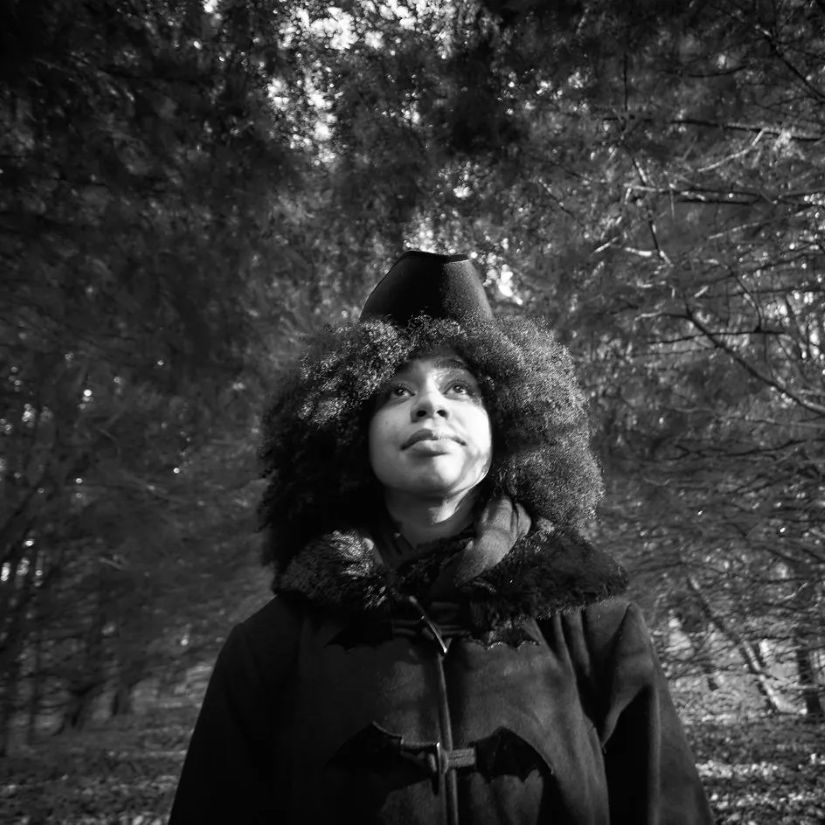
Episode 15 Lisa Connor, SEND Educator
Jennifer (Interviewer)
I'm Jennifer Essex and we're in a room in Stockton-on-Tees, in Norton. Can you tell us your full name?
Lisa (Interviewee)
Yes, it is Lisa Pauline Connor and I'm laughing at the Pauline.
Jennifer (Interviewer)
Where did you grow up?
Lisa (Interviewee)
I grew up in the east side of Middlesbrough, in a council estate called Thorntree.
Jennifer (Interviewer)
What was family life like.
Lisa (Interviewee)
Hectic and brilliant all at once. I have four older brothers, Mam and Dad. We lived in a three-bedroom council house. I'm the only girl, and the youngest, and we had a cousin that lived with us and lots of friends and family who would always just crash at ours. It was always a very busy, busy household with lots of craziness going on. It was brilliant, I loved it.
Didn't have much money. You know, we, we didn't have materialistic things, but we had lots of fun, playing lots of games, and yeah, just always playing out and just enjoying each other’s company. Yeah, lovely.
Jennifer (Interviewer)
What role did creativity play?
Lisa (Interviewee)
Oh, so, when I was…when I was about two, erm, it appeared that I was very active and we thought it was probably because I was the only girl that I was a little bit… some might say ‘attention-seeking’, we now call it ‘connection-seeking’. But I was very hyper. I was always on the move, singing songs and, you know…
And I also had pigeon toes, and my Mam took me to the doctor's and the first advice was, ‘Oh, just swap her shoes to the wrong, you know, put her left one on her right one, etcetera, and that will help turn her feet out’. So Mam did that, and people used to point and say, ‘Er, your daughter’s got her shoes on the wrong feet. So Mam took me back and was like, ‘This isn't working’. And they said, ‘Oh well, look, she’s erm…’
Another doctor saw me and was like, ‘Oh gosh, she's…she's very energetic, isn't she? We think you should take her to dancing and that might help her.’ And so, on my 3rd birthday I went to a dance class and stayed there ever since, almost, and just danced, and dance was my life, was my hobby. Even as a child, I just loved dancing. Dancing was my thing. Went to a dance school, a local dance school.
Jennifer (Interviewer)
Do you have any memory of what that meant to you, what it felt like to be in the dance class?
Lisa (Interviewee)
Yeah, I think it was just… Everybody thinks I'm outgoing, but inside, inside I'm sometimes, ‘Oh, don't ask me anything, don't talk to me’. But, on the outside… Actually, I'll tell you what it is. When I was dancing, I felt like there was a value, and I'll probably talk about value quite a lot, but there was a value to what I was doing ‘cause people were watching, and I knew I could entertain people and get their attention. But it just felt natural to me. It just felt like the most natural thing in the world, just to move. Definitely couldn't sit down, definitely couldn't… So just moving was very natural, like somebody would blink or have an itch, or something. Yeah.
Jennifer (Interviewer)
What were some of your earliest experiences with teaching?
Lisa (Interviewee)
My first experience with teaching was a baby ballet class and I was probably about 12-13 years old and I'd been dancing for such a long time that the dance teacher would then say to me, ‘Oh Lisa, can you just go and work with those students there and do this particular exercise’, or she'd send me into another room with them, and, and I very quickly thought, ‘[Sharp intake of breath] This is great. I'm passing on something that I know and somebody's doing it and they're learning’. And I remember thinking, I'm going to be a dance teacher when I grow up. That's what I want to do.
And then at 15, I had my own dance baby ballet class, and then people go, ‘Really, I mean you're only 15…’ But I had been dancing at that point for 12 years. [Laughs] So, yeah, that was my first experience. I just remember thinking, ‘[Sharp intake of breath] Oh, I've showed them to do something’, and you could immediately see an, an outcome.
Erm, and then I thought I was going to be a dance teacher, that's it - which didn't quite work out that way - but I was gonna be a dance teacher.
Jennifer (Interviewer)
Yeah, and you can see, it's so nice with dance that you can see it.
Lisa (Interviewee)
Yeah, you can see it, yeah.
Jennifer (Interviewer)
You can see people learning and developing, and like...
Lisa (Interviewee)
Yeah. Yeah, and the joy that it brought them as well, the same joy that it brought me, was like, ‘[Sharp intake of breath] Oh my gosh, we've got something in common here’. There’s a common theme and a common ground, I guess, to experience something together. Lovely. Yeah. Really nice moments.
Jennifer (Interviewer)
So how did that experience of teaching and sharing and, like, building a common language and that joy of passing the knowledge, did that inform your life growing up in any way? Were there any stories that emerged as a result of that?
Lisa (Interviewee)
I think dancing was the only thing that I thought was of real value to me…
[Emotional] When I was 9… I auditioned to be in a pantomime…at Billingham Forum, and it was something that I ended up doing year after year after year. And I had to get a licence to stay off school in order to dance in the pantomime and we got paid to dance in the pantomime….And that was something I could take home for my mum and dad, to say, ‘I’ve…I've earned this money, and....I'm nine years old [Laughs]’. And erm, and it was like, ‘Oh, actually this is, this is something that I could do’.
I thought I wasn't actually going there with this story, but getting a licence off school, I remember I wasn't the brightest at school, I think it's fair to say. I remember finding it very difficult to read, finding it very difficult to concentrate…and when you applied for the licence, it was ‘cos I would be off school for…a number of weeks, and some of the teachers were a bit concerned that I would be off school.
And Mam had gone to see the head teacher, who I used to have to go to special kind of reading sessions with, and he said, ‘You know, she’s a dancer, like, but this is what she's good at. Let’s let her do it’. So I was allowed every year to be off school for rehearsals and to work at Billingham Forum, erm, dancing.
At that time, there was only one set of, like, performers who danced. Now I think they kind of have A groups and…B groups, and… so they're not off school as much. But, yeah, we were off every day and sometimes we were doing 3 shows a day. And my dance teacher was very generous in terms of giving us wages ‘cause she got a fee for, you know, providing the students. And we used to get a wage packet every week, and, you know, if we did something wrong, it would get docked [laughs], our wages would get docked, or if our costume fell off or something, and it taught us, really, it was about working in a professional environment at that time. But yeah, schooling was really really tough for me. So my dancing was something that I could do and was… was able to… be me… Yeah.
Jennifer (Interviewer)
What was that experience like when you brought your first pay packet home to your parents? [Soft laughter]
Lisa (Interviewee)
I just always remember, like, wanting to share it. [emotional ] Money…doesn't matter…in terms of, you know, we weren't materialistic at all, but it was a struggle, at home, and so I guess being able to contribute something, for something that I'd worked at, but something that… my Mam used to clean the dance studios for me to be able to dance, so I was like, giving it back, I guess. And also, they never took it off me. I’d do my first week’s wage. I'd say, right, that's for you, and, and, and it didn’t, didn't even cover my shoes or anything. And then the rest of it, I could go and buy gifts for Christmas, for my brothers and family and friends.
So, but yeah, you know, it gives you a sense of, you know, we… we don't do things for money, but equally at the same time, it's a reward, isn't it? It's, it's a reward of, you know, we all need it to eat and to survive. So, it was something else that give it some worth as well.‘Cos we can all turn around and say, ‘Oh yeah, being creative is wonderful and being creative is, you know, it's in my soul, or it's, you know… But actually, in the reality of things, we still need to be able to…provide for our families or provide for ourselves and, you know, so that has to have a consideration as well.
Jennifer (Interviewer)
Valuing women's work…
Lisa (Interviewee)
Yeah.
Jennifer (Interviewer)
Right, and valuing creative work…
Lisa (Interviewee)
Yeah.
Jennifer (Interviewer)
And valuing girls’ work.
Lisa (Interviewee)
I think so.
Jennifer (Interviewer)
Like, all of those things…
Lisa (Interviewee)
Yeah.
Jennifer (Interviewer)
But money is how we show value in our society.
Lisa (Interviewee)
Yeah. Yeah, and I think as well it give me like an independence quite early on to think, ‘Oh actually I can do this. I'm not going to rely on my Mum and Dad’. I always relied on my Mum and Dad but not from a financial point of view ‘cause it wasn't even an option. So if I wanted to change something, if I wanted to get something, I had to make sure I could do that by myself. I was never gonna rely on anybody financially to do that for me. I think that must have been an early decision that I made.
And now thinking about it, getting that first pay packet at nine years old, must have had something to do with that, must have done. To kind of say, actually, this is great you know, I've got choices. Because that's what money does, it gives you choices, doesn't it? Gives you choices to do things. So yeah.
Jennifer (Interviewer)
Who are some of your icons and role models? Did they change?
Lisa (Interviewee)
Oh, definitely changed. Yeah. Funnily enough, and now I won't mention any names at all, but this dance teacher, you know, her first day at the dance school was my first day at the dance school and I was very loyal to the dance teacher, as you would be.
And you know, I did see that she was a business woman as well as somebody who taught me how to dance and to do the thing that I absolutely loved to do. But as I got older and started to get - you know, I went to college to do performing arts and met other teachers, other tutors, and then thought this is something that I want to do - I started to think, well actually, maybes that kind of teacher isn't the kind of teacher I want to be. That's not the person, that's not the role model that I want to give my students.
So I very quickly started to question some people’s motivations, I guess, and some people’s teaching methods and how, how they conducted themselves has a massive impact on students, and I think that's really important. It becomes about core values and as I was maturing, I didn't have the same core values as those people who I once admired.
And there was another, one of my school teachers, he was my drama teacher, and he was a huge influence to me. And he became a good friend, in later life, and he was a very knowledgeable man, very knowledgeable in the way that he would get you to come to the conclusions yourself rather than just, you know. And I guess as a dance teacher, you say, ‘Do this step and do this step and da-da-da-da’, where I believe a good teacher would let you explore and would let you make mistakes, and have the freedom to make mistakes – well, you know, I could talk a lot about that – and celebrate those mistakes, exploring and creating, and… So yeah, my drama teacher was a massive influence on me. Very, very wise man I would say, yeah.
Jennifer (Interviewer)
Is it challenging within education now to have that philosophy of experimentation?
Lisa (Interviewee)
Yes. Yes. So [exhales] basically I left school with one GCSE pass. That was it, and that was in drama. Because I did struggle, really struggled at school and was always, in my head, ‘Oh, I'm going to be a dance teacher. I'll be absolutely fine’, but then got injured and then thought, actually maybes I've put all my eggs in one basket here, but I was always, I really enjoyed the drama side of it, and the performing arts side. So school gave me that I think, and the dancing gave me the confidence to explore the other arts. And then, it's a very long story, but I went to college, had to do extra years at college because I didn't get the qualifications and then I went on to university and again struggled with the essays, struggled with the writing, and I started off, you know, getting Es, Fs in my essays and I would rewrite them and thought, ‘Okay, this is my opportunity here’. So I would rewrite them even after the deadline and say to the tutor, ‘What can I do to make this better? What is it that I need to do?’
And again, he identified that there was probably a need for me to get some extra help with writing, so they arranged that for me and then I kept on just working, and I, it felt like I just soaked everything up.
I had a little bit of imposter syndrome and I was like, ‘Oh, my gosh, everybody here, their parents, you know, bailing them out if they get in their overdraft. And…when I went for a student loan, I said, ‘If I die, who has to pay this back?’ And they were like, ‘Ee I don’t know, nobody's ever asked us that before’. And I was like, [Whispers] ‘My Mam and Dad, they can't pay this back’.
[Pause. Emotional.]
And again, that was about trying to protect…people. [Crying.} So I just…loved university. It was wonderful….Erm, again, I still had all the energy, still had all the drive. Erm, I did a communication arts degree in media and performance, but I majored in dance, and my dance tutor, every time he spoke I just got it, like I knew exactly what he was talking about and he would say things and it just seemed to click. It just seemed to, not the first time, but again, it was a language that I understood. It was something that just became so natural to me. I still had to work hard, but it, it was just my language. I found it easy to work at, where sitting behind a desk wasn't easy for me at all. Sitting wasn't easy for me at all.
So, yeah, it's something that I soaked it up, had my own key to the dance studio, would be there, twelve, one ‘o clock in the morning. Always had three jobs at University. Again, it was that thing of, ‘I'm not gonna rely on anybody. I have to do this, you know myself’. And yeah, I just loved it. So yeah, so my dance tutor, again, he was a massive influence. And it, it, it's the people who have given me the belief that I can do anything I put my mind to. And there was a point where I would believe that, but actually, now I don't think it's true, because I was never going to be an astronaut, didn't matter how much I would try, if my brain doesn't help me with my maths, I'm never going to be an astronaut. So I think much later in life, I think I was lucky that I found the thing I found most natural to do. I just worked really hard to be the best that I could be at it. You know, I'm never gonna be a mathematician and it doesn't matter how much I try. My brain doesn't work like that. My focus isn't there. So when people say, you can do anything you put your mind to it. I don't think that's always true. I think you can work hard at something, but I think you have to find that thing that you really want to do, or the, the thing that you love doing. I don't want people to think that I believe in limitations because we all need to have high standards. But equally… just because I put my mind to something isn't going to make me something that I'm not.
Jennifer (Interviewer)
Not acknowledging barriers doesn't mean they just don't exist.
Lisa (Interviewee)
Yes.
Jennifer (Interviewer)
You need to see the world…
Lisa (Interviewee)
Yes.
Jennifer (Interviewer)
And where necessary, take the barriers away.
Lisa (Interviewee)
Yeah.
Jennifer (Interviewer)
Where necessary go around, and do you think that you're teaching methodology has developed somehow around that philosophy, or, how do you approach that?
Lisa (Interviewee)
I think teaching in a S.E.N.D school, which I do now, has massively changed from me teaching in a mainstream, because in a mainstream I would say, ‘You can put your mind to anything’, or ‘You can achieve whatever you want to achieve’. But actually the reality is, and I don’t want to curb people's dreams, but we have to be realistic as well.
What I would normally say to my students, my mainstream students, I’d say, ‘Find that thing you want to spend your day… How do you want to spend your day and then just be the best that you can be at that. And if you can do that, then the work and everything else will come to you’. And I think that's something that I must have learnt quite early on, that actually this is my thing. I'm going to work at it and be the best that I can be and see where it takes me. So yes, I put my mind to it and I can achieve, but, you know, that's because I was lucky enough to find my language, find what I was able to do. Yeah.
Jennifer (Interviewer)
So people know, you're a teacher and you're the Creative Director at Priory Woods School.
Lisa (Interviewee)
Yeah.
Jennifer (Interviewer)
Can you tell us a bit about your role there?
Lisa (Interviewee)
Yeah, I am… I'm very lucky, I have the best job in the world. I genuinely mean that. Erm, I am the Creative Director there. I was mainstream at Acklam Grange School for almost 20 years, I started off as a Drama Teacher there, and then I became the Head of Faculty, so I was in charge of music, dance, drama, photography, art and loved it, absolutely loved it there. It was a beautiful, beautiful school, beautiful people. Students are amazing.
And I was actually in Africa with some students on a project and a lady said to me, ‘Oh, you know, there’s this school called Priory Woods and our Creative Director’s retiring in a couple of years, you know, you should have a look at that’. And I was like, no, no, no, I'm fine. I'm in mainstream school. I, I love this school, I love my (job)… And anyway, two years later, the job came up and I went and had a look at it, and it was just the most amazing place, and the students were just amazing, and I thought, ‘Oh my gosh, I need to try and work here’.
And so, I was very lucky to do that. And the lady whose job I got was a wonderful lady and, you know, Priory Woods is a Creative Arts School, or College, and it was through her – and I'm sure other people – but she was a real pioneer for the arts, for S.E.N.D students. So I felt like I had these huge shoes to fill, but I was really excited to do so. And these students, they do dance classes, they do art, they do music, they do drama. And it is a really, truly a special place. I've been there for six years and I would say it's changed, the cohort’s changed. So again, we've had to really adapt what we are doing and how we teach creative. And every day I'm learning, still, but I've learnt so much in that time. I'm really really grateful for it. Really grateful.
Jennifer (Interviewer)
How important is it that we support kids with accessibility requirements and nurture their creativity?
Lisa (Interviewee)
As a Creative Director of children with special needs and young people with special needs, erm… I'm obviously going to say that that is the most important subject, is the most important thing.
Um, funnily enough, yesterday I was asked about well-being, generally in school, you know, what we do for the well-being of our students and I immediately just replied with, ‘the nature of the arts lends itself to promote well-being for all students, but especially our students, and by giving value to something I think is so important, and everybody, and I do mean everybody, can be creative and everybody can achieve in the arts’. And I think that's a really, really important message to give. And I've worked with some amazing companies - Fully Booked obviously one - , but, erm, I work with a theatre company called Bamboozle, and they create work specifically for S.E.N.D children, and I have learnt so much. And it's about giving value without giving praise.
There's a lot of research on praise and not giving praise. You know, we might say, ‘Oh good boy, good girl. Well done for doing that’. But actually what does that realistically mean? You know, if somebody draws you a picture and you say, ‘Oh, that's a really good picture’. What does that mean? That, that's not really givin’ value. It doesn't really have any credit. Where if you notice the picture and you notice what's in the picture or how that picture makes you feel, how it makes... them feel, more importantly, that's giving it value. And you know, we're human beings, we want to feel valued. And I think by giving value, we are giving people confidence and that's only ever good for our well-being.
Last week I was working with the Royal Shakespeare Company and again it was a S.E.N.D conference and they are trying to learn from practitioners like myself and in other schools about how to make Shakespeare more accessible. Every single child in my school is currently studying, exploring, Macbeth. Last year we did Romeo and Juliet. Next year it will be something different. And they have done a great research project called Time to Act where they took students, some of them with profound learning disabilities, and the research was about their well-being before the project that they did, using the RSC's pedagogy, and the results were incredible. And I think all of the arts does that, you know, but to think, ‘Oh, Shakespeare, oh it’s ever so, you know… It's not accessible at all, especially in East Middlesbrough, with children with, some of them, profound learning disabilities.’ Or, ‘What's the value of that? Why do they possibly need to know Shakespeare?’ ‘Cause you also get that. And it's very accessible and it does give value and it almost puts everybody on a, on a level understanding of it as well.
So I think the question was, how important is it? It's incredibly important and that's not just drama. I can speak drama because that's a subject that I teach and I'm very passionate about. But I think music, art, dance, it is about giving value to people. I certainly felt valued when I'm dancing, whether somebody's watching me or not. If I'm dancing in my bedroom on my own as a teenager, if I'm singing in the shower, if I'm, you know, doodling on a piece of (paper). It's value, isn't it? And as humans, we all want to be entertained. We all have that downtime of wanting to be entertained, so therefore, we're seeking that, so creativity is incredibly important.
What I should say is a lot of people think that they aren't creative. Sometimes I walk into a room or somebody asks me, what do you do? ‘I'm the Creative Director’, ‘Oh, well, you, you wouldn't get me doing that, you know, I'm not creative’. And actually, you are. You might just be creative in something different. You know, we need creative mathematicians. We need creative engineers. Creativity is all around us.
We're looking in a beautiful room, right now. Everything in this room has been designed. Everything has been created by somebody. You know, even the technology that we're recording on has been [Laughs] created and designed and, and that's, that brings creativity, so it's incredibly important for everybody.
Jennifer (Interviewer)
So you were working on this project -
Lisa (Interviewee)
Yeah.
Jennifer (Interviewer)
…with the Royal Shakespeare Company.
Lisa (Interviewee)
Well I, I wasn't working on the research project. They were working with two local schools to - . Actually, one local school in Stratford and one school in Cambridge. But I was part of, you know, they were sharing the results and things with us, where the project that I'm currently with them is helping them to make it even more accessible to everybody.
Jennifer (Interviewer)
And what kind of contributions have you offered?
Lisa (Interviewee)
I think people think disability and accessibility – there's a whole different level that we don't see as a society, and that's really sad actually. We don't see, erm, S.E.N.D schools at the moment – we don't see them out and about. Sometimes it's not safe, because we haven't created an environment for them to be safe, which is sad. So they come to our school, and we create that world for them, which is safe and creative, and, and a learning environment that they can…thrive in. Yeah.
And again, that probably came from my work with Bamboozle Theatre Company ‘cause that's exactly what they would do. You know, they create pieces of work where, whatever the students are doing… If, if a student’s walking up and down, or pacing, for example, it doesn't mean it's to say that they're not listening. It doesn't mean to say that they're not focusing, just because somebody's not making eye contact with you. It doesn't mean to say that they are not listening to what you're saying or, or if somebody is stimming in a corner, or somebody is… you know. It should be that we have a, a real good understanding of everybody's needs.
You know, I think it's so important, and again when we're talking about value, about giving people the freedom to express themselves… We're born with that, aren't we? We're exploring all the time, you know. And it's not until adults stop us doing that, and sadly, sometimes that is in schools.
Oh, I know what I was talking about earlier, I was talking about mainstream schools and teaching there. And currently, it's still happening – so so sad for the creative arts, I think in education now – is that we are teaching children to test. That's what we are doing. And even at GCSE level, we are saying to students, if you say this line in this particular way, this is what will happen. You will get this particular mark ‘cause that's what the examiners are looking for. If you write this in this particular way, you will get more marks for it. What, what? Why on earth are we doing that? Like, that's not being creative, that's not exploring, that's not… You know, we are limiting, we are absolutely limiting, and thankfully not having those constraints in an S.E.N.D school does give that total freedom and giving somebody the freedom of expression again gives them value, which again makes them that whole person and is better for their well-being and them as humans.
Jennifer (Interviewer)
What are some moments that you’re proud of?
Lisa (Interviewee)
Ooh, I need to think about this maybes but pride, pride is a really difficult thing to, to talk about I think. I think those moments come – this is going to sound really, really cheesy, so apologies, ‘cause I, I don't quite know how to articulate it – but it's not any one event or working with the Royal Shakespeare Company or working with Bamboozle Theatre Company and trying to drive things forward or Tin Arts that I work with or other people that I have the privilege of trying to pick their brains and how they work.
It's those moments in the classroom when you see, you see a ‘wow’ moment, or you see the joy, or that recognition, that [Sharp intake of breath] I've just, I've just achieved something, or I've, I've just done something or you can see them…when they look at their own work in the Art Room. It's those things that I would say every day, that's the proud moments, and I, it's not proud of what I've done – it's proud for them. Yeah. I can go, ‘Oh actually, it was on the 12th of September when we did a production where all the students, you know, created it themselves and they come up with their own ideas, because that was really important to me, that they take ownership for their work, and it is their work and it is - . Oh I do wanna say this actually - how important the process is and not the end product. I think that is super, super important for educators and that's, I think, what we're getting wrong. You know, again, if you go back to your dancing and then being entertained, we all sit there and want to be wowed by some kind of performance or show, and that, ‘Oh my gosh, wasn't that amazing, wasn't that wonderful?’ But we're never really thinking about the process of where that started, to get to that point.
And I think again, working at Priory Woods was something that I learnt very quickly. It is about the process. It is about those achievements along the way and not just about the end product. Yeah, I think pride is seeing those ‘wow’ moments, and you do see them every day. And it could be the first time somebody's…touched a new material, or somebody’s…explored in a way that they've not done so before. Yeah, I would say that's what makes me proud.
OUTRO: Thank you for listening to Periplum’s Trailblazers Podcasts funded by the National Lottery Heritage Fund. To listen to more of the series, and follow our projects visit our website at periplumheritage.com